

Data Sovereignty in the Energy Sector
An Inconvenient Truth
Most energy providers believe they have their data under control. In reality, their data has long since taken control of them.

Why Internal Data Fragmentation Prevents True Data Sovereignty
Data sovereignty is the buzzword that looks good in executive board presentations—but in reality, it’s surprisingly rare. Energy providers and energy-intensive companies, in particular, like to tell themselves that they have their data under control. In fact, they are often at the mercy of: systems that have evolved over time, platform providers, regulatory constraints—and, not least, their own organization.
Internally, the problem begins where data is generated. Network operations, sales, generation, procurement—each department optimizes on its own, hoards data, and defends it like its own territory. The result is not data sovereignty, but data fragmentation. Anyone who believes a data lake automatically solves this problem is confusing technology with governance. Without clear responsibilities, even the most modern tech stack remains nothing more than a new form of chaos.
Who owns the data at the energy company?
The uncomfortable question is: Who really owns the data in a company? The IT department, which stores it? The business unit that generates it? Or the executive board, which wants to use it strategically? As long as this question remains unanswered, data sovereignty remains an empty promise. Instead, shadow processes, parallel Excel worlds, and decisions based on contradictory figures emerge—a luxury that energy-intensive industries cannot really afford in the face of global competition.
Cloud Dependency: When Platform Providers Take Control
But even if order prevails internally, power is shifting outward. Cloud providers, platforms, and specialized software solutions have long been deeply integrated into the value chain. They promise efficiency, scalability, and innovation—while simultaneously creating new dependencies. Anyone who has their data analyzed within proprietary ecosystems should ask themselves honestly: Who is actually learning from whom here? And who stands to benefit more from this data in the long run?
Regulation as an Obstacle to Data Sovereignty
Added to this is regulation, which is particularly pronounced in the energy sector. Transparency, data protection, traceability—all of these are necessary, but they also force companies into a straitjacket that makes true data sovereignty difficult to achieve. After all, sovereignty means not only control, but also the ability to act. Anyone who has to overcome compliance hurdles for every instance of data use loses speed—and with it, often the decisive competitive advantage.
Cooperation Models and Data Rooms: Added Value vs. Loss of Power
At the same time, new data spaces, collaborations, and platform models are emerging. Politically desired, technologically feasible, economically attractive. But this reveals yet another conflict of interest: Those who share data create added value—but also relinquish power. The idea that one can simultaneously achieve maximum cooperation and maintain maximum control is simply naive.
Prosumers and Data Sovereignty: Why End Users Are Rewriting the Rules
And then there’s the customer. Or, more precisely: the prosumer. With smart meters, decentralized generation, and digital services, data sovereignty is increasingly shifting toward end users. Companies that believe they can ignore or control this trend will quickly realize that trust and transparency are becoming critical competitive factors.
The Real Challenge: Consciously Managing Conflicting Goals
So the real challenge lies not in the technology, but in dealing with conflicting goals.
- Control versus Innovation.
- Security versus Accessibility.
- Autonomy versus Ecosystem.
Data sovereignty means consciously managing these tensions—not trying to resolve them.
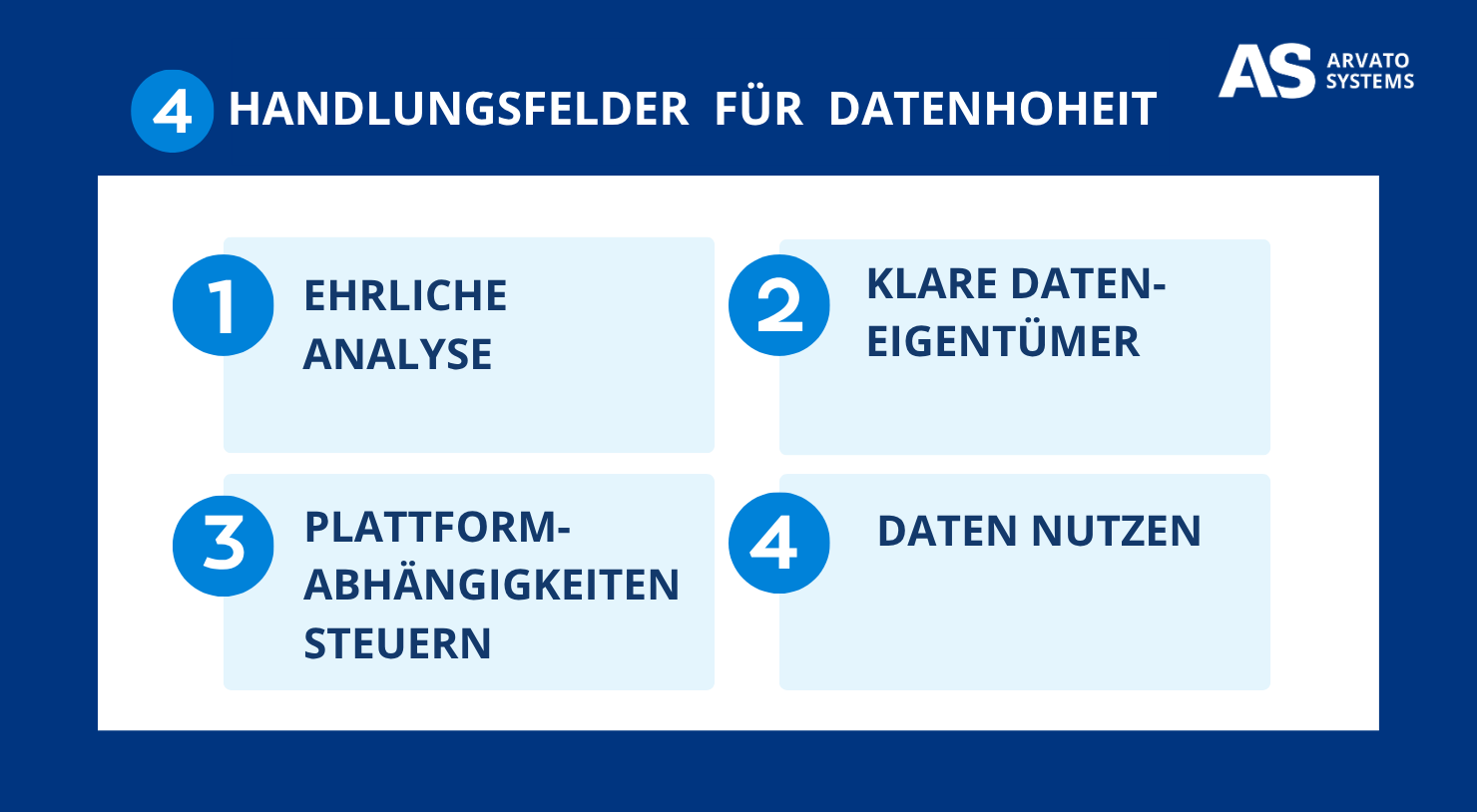
Four Areas of Action for True Data Sovereignty
What does this imply?
- An honest analysis: Where is control—and where isn't it?
- Clear Owners: Data needs people who are accountable for it, not just administrators.
- Managing platform dependencies: Don't just accept them blindly; actively manage them.
- Using data: Protection alone does not create added value.
The thesis is uncomfortable, but clear: In the energy sector, what matters is not who has the most data—but who has the courage to consciously relinquish control while simultaneously redefining it strategically.
Conclusion: Data sovereignty is a negotiation process
Ultimately, data sovereignty is not a static characteristic, but an ongoing process of negotiation—both internally and externally. The crucial question is not whether data is shared. That has been happening for a long time. The question is who defines the rules for it.
And this is exactly where the industry splits: into those who shape data sovereignty—and those who will eventually lose it.
Why Data Sovereignty Is the Foundation for True Sustainability
Data sovereignty goes beyond efficiency and control: it is a crucial driver of sustainability. Without consistent, verified data, it is impossible to accurately track energy consumption or prepare audit-ready ESG reports. Sustainability management requires transparency regarding supply chains, emissions, and resource use—and this is precisely where the value of a clear data strategy becomes apparent.
Those who view sustainability solely as a compliance issue are missing out on opportunities: Companies that actively use their data turn regulatory pressure into competitive advantages.

Data sovereignty is a prerequisite for transparency—and thus for successful sustainability. With GreenScreen, you can use your data to create an ESG strategy that is audit-ready, efficient, and digital.
Frequently Asked Questions About Data Sovereignty
-
What does data sovereignty mean?
The ability to use data in a controlled and strategic manner independently, even within complex ecosystems.
-
Why is data sovereignty so difficult?
Because internal silos, compliance, and the platform economy create conflicting requirements.
-
Does data sovereignty have anything to do with sustainability?
Yes. Without data verification and transparency, no company can produce credible ESG reports or implement sustainability strategies.


Written by
