


How Modern System Integration Is Revolutionizing E-Commerce Fulfillment
Smart Warehouse meets Smart Shipping
The new EHI Study 2025 shows: Retailers are relying on stable, resource-efficient, and data-driven processes in shipping, packaging, and returns management to specifically optimize material usage and transportation routes. This blog post shows how modern system integration successfully implements these trends in e-commerce fulfillment and sets new standards for efficiency and customer satisfaction.
The Current State of E-Commerce Fulfillment: Shipping, Packaging, and Returns Management
Retail logistics is at a turning point: New regulatory requirements, rising costs, and technological advances are forcing retail and consumer goods companies to radically rethink their e-commerce fulfillment strategies. The current EHI Study “Shipping, Packaging, and Returns Management in E-Commerce 2025” shows: While the focus used to be on speed and short-term competitive advantages, process stability, cost-effectiveness, and a stronger emphasis on energy-efficient operations are now at the heart of e-commerce fulfillment.
Retailers are increasingly focusing on predictable delivery times, investing in automated warehousing and returns processes, and developing packaging solutions that use fewer materials and have a higher recycling content in order to meet regulatory requirements and customer expectations.
Modern System Integration as the Key to E-Commerce Fulfillment
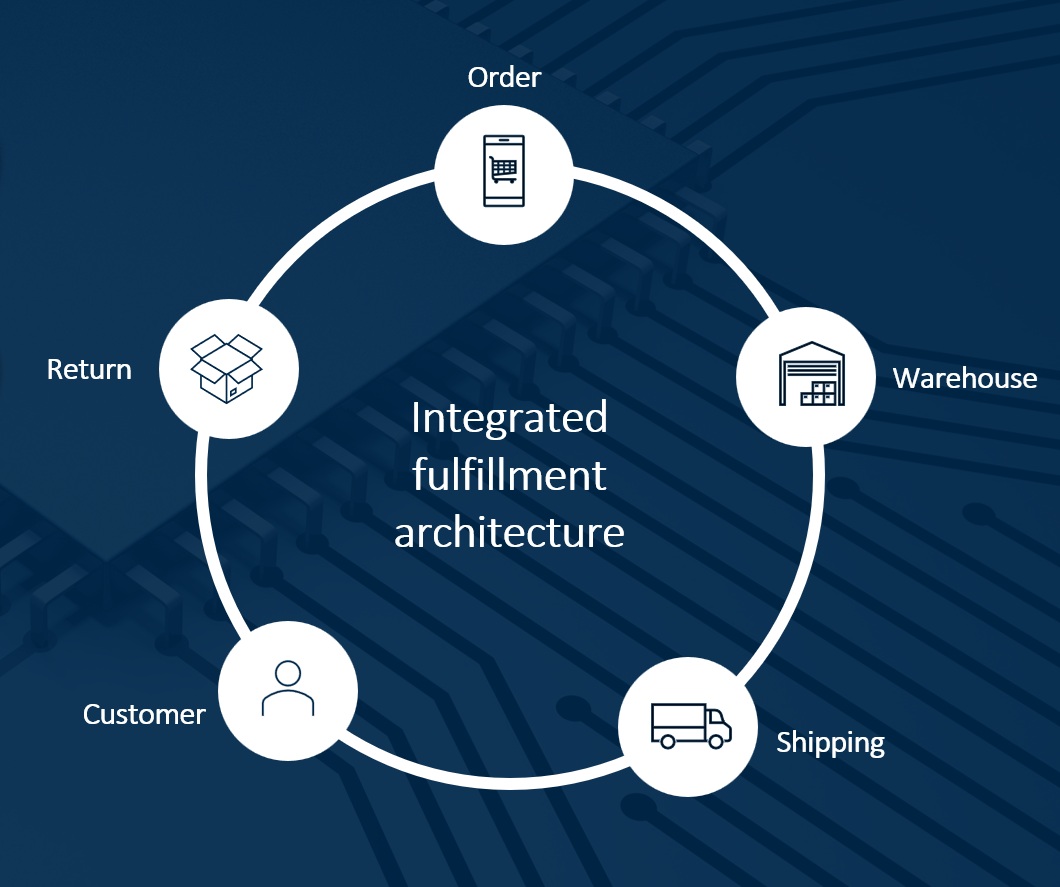
The pressure to make processes more efficient and transparent is increasing. The integration of data, automation and the creation of flexible, scalable fulfillment structures are becoming key success factors in e-commerce fulfillment. Companies that rely on modern system integration now are creating the basis for future-proof and competitive logistics processes.
A current project by Arvato Systems with a German logistics service provider shows how the combination of the logistics platform platbricks®, a shipping management solution from VCE Solutions and autonomous mobile robots from Locus Robotics to create an end-to-end architecture for e-commerce fulfillment. This seamlessly connects shipping and returns processes and ensures greater speed, flexibility and process reliability.
Core points of the architecture:
- platbricks® as a cloud-based logistics platform and control core
- Integration of autonomous mobile robots for order picking
- Connection of a shipping management software
- Open, standardized interfaces for real-time data exchange and flexible expandability
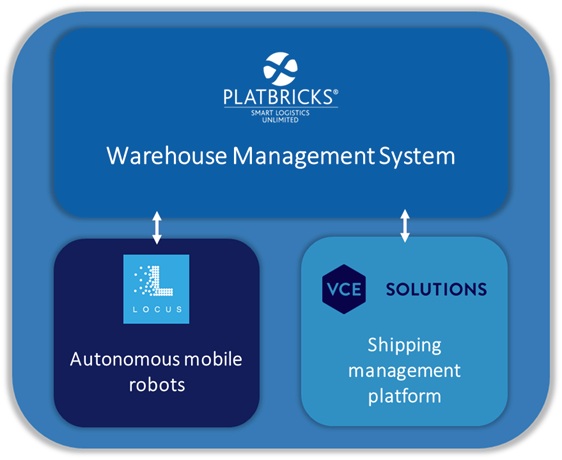
In the project presented, platbricks® forms the central control system for all fulfillment processes. The cloud-based logistics platform integrates the warehouse management system with autonomous mobile robots and a shipping management solution. Thanks to open interfaces and real-time data flow, stocks, order status and shipping information are synchronized throughout. The result: maximum transparency, flexible scalability and a stable basis for automation and future innovations.
E-Commerce Fulfillment for a Brand Manufacturer: A Practical Example
The project involved restructuring the fulfillment for the e-commerce business of a brand manufacturer. The challenges: significantly higher order volumes, complex returns processes and increasing service requirements - with limited resources. The solution: a new, integrated fulfillment architecture that digitally and automatically maps all process steps from ordering to shipping and returns.
Overview of the process: optimal shipping carton occur
- Order data is prioritized and processed in the warehouse management system (WMS).
- Picking orders are transferred to the robots that bring the items to the packing table.
- The system-supported packaging and selection of the optimum shipping carton take place at the packing table.
- The shipping label is generated automatically; the appropriate carrier is already preconfigured.
- Tracking information is seamlessly transmitted to the customer.
The Added Value for E-Commerce Fulfillment
- Increased efficiency: Automation and optimized information flows reduce throughput times in e-commerce fulfillment by up to 30%.
- Process reliability: Systemic safeguarding and automation reduce errors and increase data quality.
- Transparency: Everyone involved has access to a standardized database - decisions are made faster and more informed.
- Scalability: The architecture can be flexibly expanded and adapted to seasonal peaks.
- Employee focus: Automation takes the pressure off staff and increases satisfaction.
Success Factors for Integration in E-Commerce Fulfillment
- Integration is more than just an IT project: It's about the interaction of technology, processes, and people.
- Standardized interfaces: They reduce effort and complexity.
- Acceptance of automation: Robots support employees, but do not replace them.
- Open communication: Transparency about goals and changes is crucial for the success of the project
Outlook: AI, Resource Efficiency, and Customer-Centricity in E-Commerce Fulfillment
The future of e-commerce fulfillment is data-driven and efficient. In the future, artificial intelligence will be able to derive forecasts from historical data, manage demand, and proactively optimize the use of warehouse and transportation capacity. Measures to conserve resources and ensure CO₂ transparency are gaining importance: The integration of CO₂ tracking and smart packaging solutions is becoming a key lever, as customers expect flexible shipping options and full transparency regarding their shipments. Companies in the retail and consumer goods industries that embrace modern system integration now are laying the foundation for innovation and greater process efficiency.
Conclusion: System Integration as a Success Factor in E-Commerce Fulfillment
System integration is the decisive factor for modern, efficient, and future-proof fulfillment in e-commerce. The combination of technology, automation, and people makes the difference - today and tomorrow.
Digital commerce describes electronic commerce through digital channels such as online stores, marketplaces and mobile apps. This modern form of commerce enables companies to offer their products globally. With digital commerce, companies can expand their product range, address new target groups and implement innovative sales strategies to increase their success.
Arvato Systems stands for innovative solutions in the field of digital commerce. With in-depth industry knowledge in retail and the consumer goods industry, we offer customized services that cover the entire process chain. From optimal master data and article management to customized e-commerce architectures and powerful customer loyalty systems - we provide you with holistic solutions for your digital success.


Written by

André Haff is driving the further development and strategic positioning of the platbricks® cloud logistics platform in the Digital Supply Chain division at Arvato Systems. His focus is on innovative supply chain solutions that increase efficiency, transparency and sustainability - from pre-sales to partner management.